
 Aparna Ganguly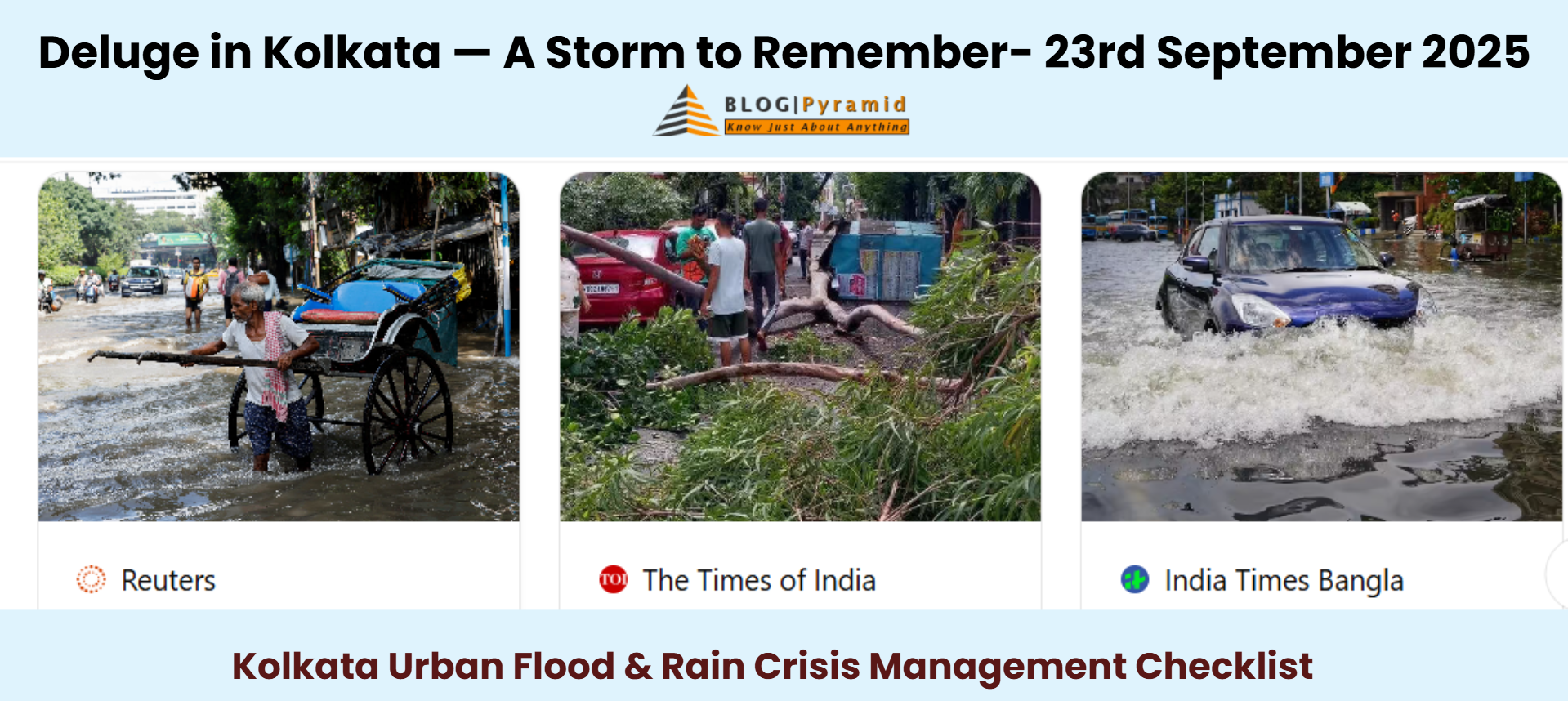
Deluge in Kolkata — A Storm to Remember
What happened — the deluge
-
On 23 September 2025, Kolkata was hit by an exceptionally heavy rainfall event — about 251.4 mm of rain was recorded in the 24-hour span ending 8:30 am, making this one of the highest single-day rainfalls recorded in September for the city. The Indian Express+2India Today+2
-
During the intense phase (around 2:30 am to 5:30 am), up to 98 mm fell in just one hour, though the IMD noted it did not quite reach the threshold of a “cloudburst” (which would require > 100 mm in an hour). The Indian Express+1
-
Meteorologically, this was not caused by a cyclone. Instead, it stemmed from a low-pressure system and associated convective thunderstorms over the northeast Bay of Bengal. India Today+1
-
The rain event coincided with high tide conditions in the region, which exacerbated flooding and prevented normal drainage of runoff. Hindustan Times+1
The cost — lives lost, infrastructure crippled
-
Fatalities and injuries: At least 12 people died in Kolkata and surrounding areas, many from electrocution (as flooded streets exposed live wires), and some by drowning. Hindustan Times+3Reuters+3The Economic Times+3
-
Widespread flooding & waterlogging: Many streets, especially in southern and eastern parts, remained submerged. Vehicles were stranded, areas were isolated, and commuting was disrupted. The Economic Times+3The New Indian Express+3The Times of India+3
-
Transport disruptions: Metro, local trains, and road traffic were severely affected. Many flights were cancelled or delayed at the airport. Hindustan Times+2Reuters+2
-
Tree uprooting & power crises: Numerous mature trees were uprooted across the city, blocking arteries and compounding traffic chaos. Power outages and short circuits from floodwaters worsened the crisis. The Times of India+2The Economic Times+2
-
Festival & economic impact: With Durga Puja around the corner, rain damaged many pandals (temporary festival structures), idols, and decorations. Shopping hubs were submerged, and last-minute festival preparations sustained heavy setbacks. India Times Bangla+2The Times of India+2
Why this was especially severe — underlying factors
-
Intensity over short duration: The rainfall was extremely concentrated in a few hours, overwhelming drainage systems. The Times of India+1
-
Poor drainage, blocked drains, inadequate infrastructure: The existing drainage capacity wasn’t enough to cope with such high inflows; many drains were clogged or silted. Hindustan Times+2The Indian Express+2
-
External water inflows: Water from upstream in other districts or rivers may have added to the volume flooding into the city. Hindustan Times+1
-
High tide / sea level constraints: At high tide, runoff from the city has less outlet, so drainage backs up. Hindustan Times+1
-
Electrical wiring, infrastructure vulnerabilities: Many electrocution deaths point to unsafe wiring, poles, or infrastructure that could not withstand inundation. The Economic Times+3The Indian Express+3Hindustan Times+3
What it reveals — lessons & challenges
-
The event underscores how fragile urban systems are when extreme weather pushes them beyond design limits.
-
Disaster preparedness (timely alerts, resilient infrastructure, backup drainage, secure power systems) is critical.
-
Environmental planning matters: city drainage, river dredging, control over upstream flows, and maintaining green cover can mitigate damage.
-
Social response & equity: The poorest neighborhoods (lower-lying zones, poorly planned areas) tend to suffer the most; help, relief, and rebuilding must pay attention to those.
🌧️ Natural Crisis Management for Urban Flooding & Extreme Rains
1. Before the Event — Preparedness
-
Urban planning & drainage upgrade
-
Modernize drainage systems to handle higher rainfall intensities.
-
Desilt and regularly clean stormwater drains, canals, and pumping stations.
-
Ensure “blue-green infrastructure”: wetlands, ponds, and parks that can absorb excess rain.
-
-
Better forecasting & alerts
-
Use high-resolution weather radars and AI-based prediction models for hyperlocal rainfall alerts.
-
Push SMS/WhatsApp warnings to citizens (like IMD cyclone alerts).
-
-
Electrical & infrastructure safety
-
Insulate and elevate electrical wiring/power distribution.
-
Map “high electrocution risk” zones and cut off power automatically when waterlogging crosses danger levels.
-
-
Community training & awareness
-
Educate citizens on safe practices (avoiding flooded streets, not touching poles/wires).
-
Mock drills for schools, hospitals, housing complexes on emergency evacuation.
-
2. During the Event — Response
-
Real-time crisis control rooms
-
Integrated “war room” linking IMD, police, transport, power supply, and disaster management.
-
Use GIS dashboards to monitor flooded areas and blocked roads.
-
-
Evacuation & shelter
-
Identify and pre-equip community centers and schools as emergency shelters.
-
Special attention to vulnerable populations (elderly, pregnant women, children).
-
-
Transport & rescue
-
Deploy boats, rubber dinghies, and portable pumps in waterlogged zones.
-
Quick clearing of uprooted trees with pre-positioned equipment.
-
-
Medical response
-
Mobile medical units in flood zones.
-
Stockpiles of ORS, anti-snake venom, tetanus injections, and emergency medicines.
-
3. After the Event — Recovery & Mitigation
-
Relief & rehabilitation
-
Compensation for loss of life and livelihood (already announced by WB govt for electrocution victims).
-
Quick restoration of power, clean drinking water, and health camps to prevent epidemics (dengue, cholera).
-
-
Infrastructure audits
-
Post-event analysis of which drains failed, which substations were submerged.
-
Redesign weak zones with higher elevation roads, new culverts, and pumping capacity.
-
-
Long-term climate adaptation
-
Recognize that “once in 50 years” rain events are becoming more frequent due to climate change.
-
Incorporate climate projections into Kolkata’s master plan.
-
Rainwater harvesting, urban sponge city models, stricter building codes for flood-prone areas.
-
🌍 Broader Takeaway
Cities like Kolkata are low-lying and river-linked, so extreme rainfall + high tide = unavoidable flooding risks. The goal is not to prevent rain, but to reduce human loss and disruption by building resilient infrastructure, rapid-response systems, and aware communities.
Kolkata Urban Flood & Rain Crisis Management Checklist
1. Early Warning & Monitoring
-
Activate the city’s weather monitoring system; track rainfall intensity via IMD alerts.
-
Issue timely warnings through SMS, local media, social media, and public announcement systems.
-
Coordinate with West Bengal Disaster Management Authority (WBDMA) for updates.
-
Map vulnerable areas prone to waterlogging or flash floods.
2. Emergency Response Activation
-
Mobilize Kolkata Municipal Corporation (KMC) emergency teams and fire services.
-
Ensure rapid deployment of National Disaster Response Force (NDRF) and local volunteers.
-
Prepare ambulances, boats, and high-clearance vehicles for rescue operations.
-
Establish 24/7 command centers at key districts.
3. Drainage & Infrastructure Management
-
Clear main drains, culverts, and stormwater channels before and during heavy rains.
-
Deploy water pumps in low-lying areas to prevent prolonged waterlogging.
-
Inspect bridges, roads, and underpasses for structural hazards.
-
Coordinate with Kolkata Police for traffic management around flooded areas.
4. Community Preparedness
-
Conduct awareness drives on flood-safe routes and emergency shelters.
-
Encourage households to maintain emergency kits (water, food, medicines, flashlights).
-
Set up local neighborhood watch groups to assist elderly or differently-abled residents.
-
Provide guidelines for safe storage of valuables and electrical appliances.
5. Evacuation & Shelter Management
-
Identify and prepare schools, community halls, and public buildings as temporary shelters.
-
Ensure shelters have safe drinking water, sanitation, and basic medical facilities.
-
Maintain a list of residents requiring assistance during evacuation.
-
Regularly update citizens on safe zones and evacuation routes.
6. Medical & Health Preparedness
-
Mobilize local hospitals and clinics for potential waterborne disease outbreaks.
-
Set up mobile medical units in flooded neighborhoods.
-
Stockpile essential medicines, ORS, and mosquito repellents.
-
Launch awareness campaigns about hygiene and infection prevention.
7. Communication & Coordination
-
Maintain a real-time reporting system between KMC, police, health authorities, and volunteers.
-
Provide constant updates through radio, TV, social media, and loudspeakers.
-
Establish a hotline for citizens to report emergencies or request help.
-
Conduct daily briefings with government officials and NGOs involved.
8. Post-Flood Recovery & Assessment
-
Inspect infrastructure for damage once waters recede.
-
Clean public areas, drains, and streets to prevent secondary health hazards.
-
Document lessons learned for improving future flood management plans.
-
Provide financial aid and support to affected families for restoration.
9. Long-Term Preparedness
-
Invest in modern stormwater management systems and flood-resilient infrastructure.
-
Encourage community-level rainwater harvesting and waterlogging mitigation projects.
-
Conduct regular disaster drills in schools, workplaces, and neighborhoods.
-
Promote urban greening to reduce surface runoff and improve drainage absorption.
┌─────────────────────────┐
│ 1. Early Warning & │
│ Monitoring │
└─────────────┬──────────┘
│
┌──────────────┴───────────────┐
│ Issue alerts to citizens │
│ Track vulnerable zones │
└──────────────┬──────────────┘
│
┌─────────────┴─────────────┐
│ 2. Emergency Response │
│ Activation │
└─────────────┬─────────────┘
│
┌────────────────────┴─────────────────────┐
│ Mobilize NDRF, KMC, Fire, Volunteers │
│ Deploy rescue vehicles & boats │
└─────────────┬───────────────────────────┘
│
┌───────────┴────────────┐
│ 3. Drainage & │
│ Infrastructure │
│ Management │
└───────────┬────────────┘
│
┌───────────────┴─────────────────┐
│ Clear drains, deploy pumps │
│ Inspect roads & underpasses │
└───────────────┬─────────────────┘
│
┌───────────┴────────────┐
│ 4. Community Preparedness │
└───────────┬────────────┘
│
┌───────────────┴─────────────────┐
│ Emergency kits, safe routes │
│ Local volunteer groups │
└───────────────┬─────────────────┘
│
┌───────────┴────────────┐
│ 5. Evacuation & Shelter │
└───────────┬────────────┘
│
┌───────────────┴─────────────────┐
│ Identify shelters, supply water │
│ & sanitation │
└───────────────┬─────────────────┘
│
┌───────────┴────────────┐
│ 6. Medical & Health │
└───────────┬────────────┘
│
┌───────────────┴─────────────────┐
│ Mobile medical units & ORS │
│ Hygiene awareness │
└───────────────┬─────────────────┘
│
┌───────────┴────────────┐
│ 7. Communication & │
│ Coordination │
└───────────┬────────────┘
│
┌───────────────┴─────────────────┐
│ Hotline, updates via media │
│ Daily briefings & NGO coordination │
└───────────────┬─────────────────┘
│
┌───────────┴────────────┐
│ 8. Post-Flood Recovery │
└───────────┬────────────┘
│
┌───────────────┴─────────────────┐
│ Inspect & repair infrastructure │
│ Clean public areas │
│ Aid for affected families │
└───────────────┬─────────────────┘
│
┌───────────┴────────────┐
│ 9. Long-Term Preparedness │
└───────────┬────────────┘
│
┌───────────────┴─────────────────┐
│ Flood-resilient infrastructure │
│ Community drills & greening │
└─────────────────────────────────┘




 Sophie Parker